Your Home Has a Story:
Here’s How Its History Can Shape Your Interior
Have you ever wondered why some homes look best with ornate mouldings and rich colours, while others suit clean lines and minimal furniture?
The answer often lies in the era your home was built.
Every period in history has its own architectural features, materials and decorating style. While you don’t have to recreate a period home exactly as it once was, understanding its origins can help you make better design decisions.
Here’s a guide to some of the most influential interior design eras and the characteristics that define them.
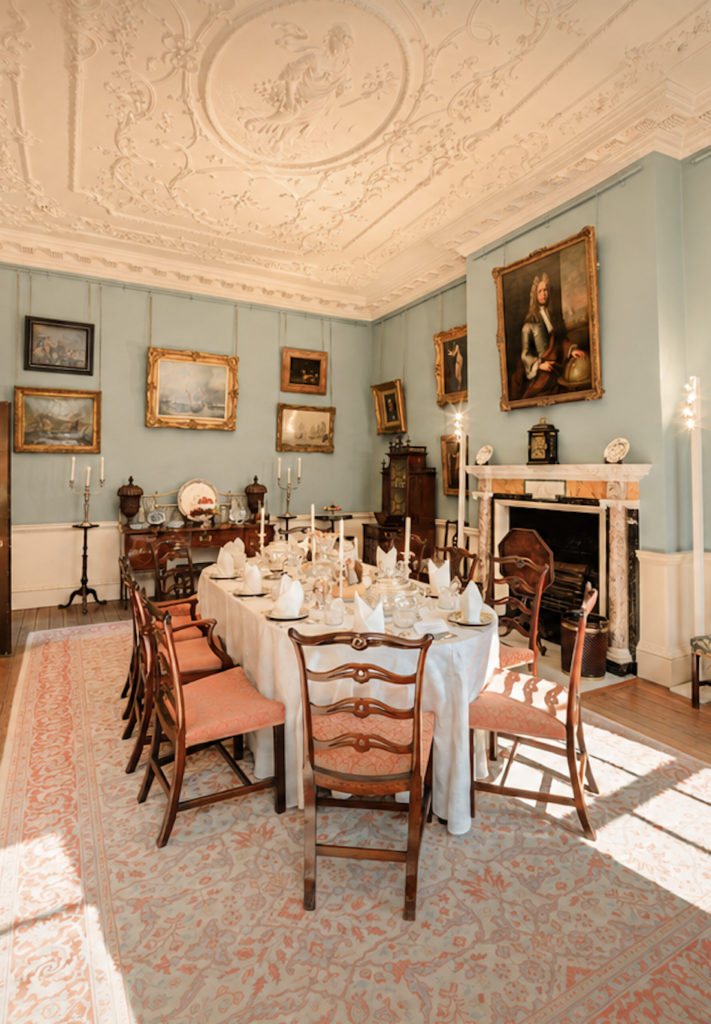
Georgian (1720–1840)
The Georgian period is widely regarded as one of Britain’s most elegant architectural eras. Inspired by the classical architecture of
Ancient Greece and Rome, Georgian interiors were designed around symmetry, proportion and refined decoration.
Architectural features
- High ceilings
- Large sash windows
- Symmetrical layouts
- Decorative cornicing
- Ceiling roses
- Grand fireplaces
- Panelled doors
Everything was carefully balanced, creating rooms that feel calm and sophisticated.
Colour palette
Popular Georgian colours included:
- Soft blue
- Soft green
- Burgundy
- Dusky pink
- Warm stone
- Creams and neutrals
Furniture
Furniture reflected wealth but remained graceful.
Materials included:
- Mahogany
- Walnut
- Satinwood
- Rosewood
Popular pieces included:
- Shield-back dining chairs
- Elegant sideboards
- Delicate tables
- Chinoiserie influences
- Classical detailing
How to recreate the look today
You don’t need antique furniture. Instead, focus on:
Keeping layouts symmetrical
Using heritage-inspired paint colours
Restoring fireplaces
Adding decorative mouldings
Choosing timeless furniture with elegant proportions
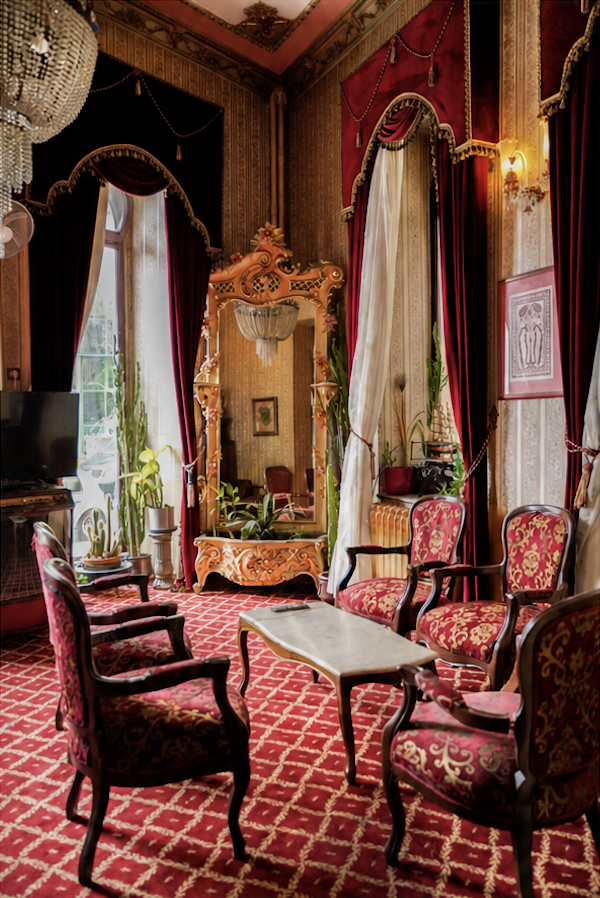
Victorian (1837–1901)
The Victorian era embraced richness, comfort and decoration. As the British Empire expanded and the Industrial Revolution
brought new manufacturing techniques, homes became more elaborate, filled with luxurious fabrics, intricate patterns and
carefully collected possessions. Interiors reflected status, personality and a love of craftsmanship.
Architectural features
- High ceilings
- Bay windows
- Decorative ceiling roses
- Ornate cornicing
- Picture rails
- Stained glass
- Decorative fireplaces
- Intricate woodwork
Victorian interiors celebrated detail, creating warm and characterful spaces.
Colour palette
Popular Victorian colours included:
- Deep burgundy
- Forest green
- Navy blue
- Plum
- Rich ochre
- Chocolate brown
- Gold accents
Furniture
Furniture was substantial, decorative and built to last.
Materials included:
- Mahogany
- Oak
- Walnut
- Rosewood
Popular pieces included:
- Chesterfield sofas
- Button-back armchairs
- Ornate sideboards
- Display cabinets
- Marble-topped tables
- Decorative mirrors
How to recreate the look today
You don’t need to fill every corner. Instead, focus on:
Displaying artwork and collected objects
Using rich heritage colours
Layering textures and patterns
Restoring original fireplaces
Mixing antique and modern furniture
Choosing statement lighting
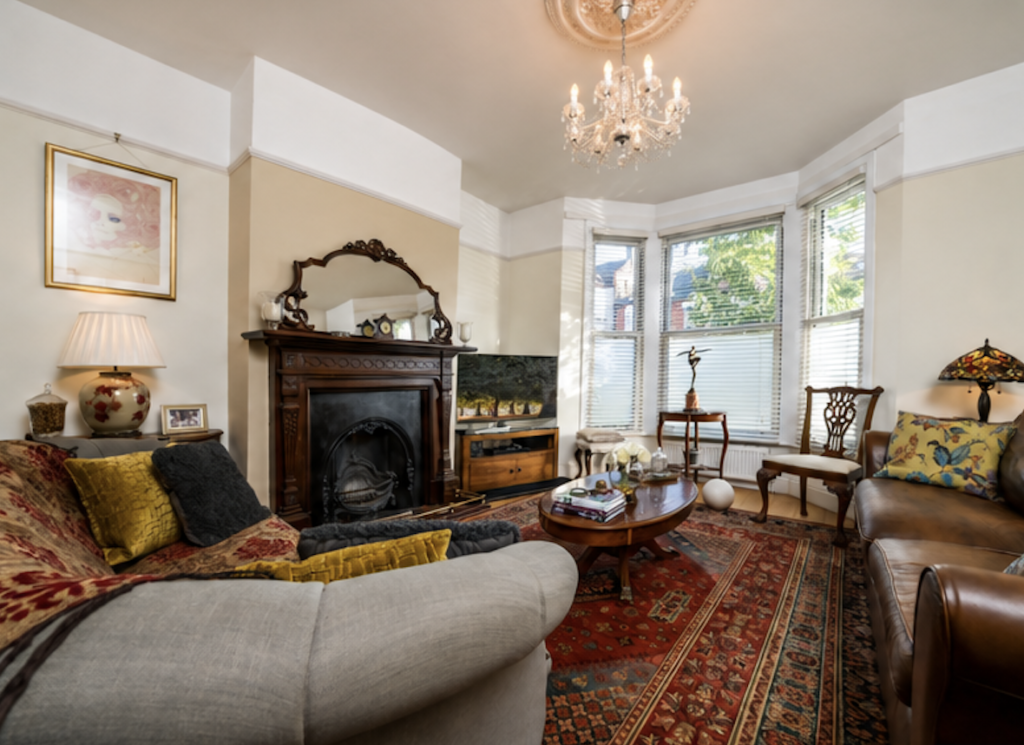
Edwardian (1901–1914)
Edwardian interiors marked a shift away from the heavy decoration of the Victorian era. Homes became brighter, lighter and more practical,
with elegant detailing replacing excessive ornamentation. The result was a relaxed, airy style that still feels timeless today.
Architectural features
- High ceilings
- Large bay windows
- Decorative plasterwork
- Picture rails
- Wide hallways
- Wooden flooring
- Fireplaces
- Built-in storage
Edwardian homes were designed to maximise natural light and create welcoming family spaces.
Colour palette
Popular Edwardian colours included:
- Soft sage green
- Duck egg blue
- Warm cream
- Pale grey
- Soft pink
- Light stone
- Ivory
Furniture
Furniture became lighter and less formal.
Materials included:
- Oak
- Satinwood
- Painted timber
- Wicker and cane
Popular pieces included:
- Elegant display cabinets
- Dressing tables
- Upholstered armchairs
- Occasional tables
- Built-in cabinetry
How to recreate the look today
Instead of heavy decoration, focus on:
Keeping rooms bright and uncluttered
Choosing soft heritage colours
Letting natural light fill the room
Mixing painted and natural wood furniture
Restoring period fireplaces
Using floral fabrics sparingly
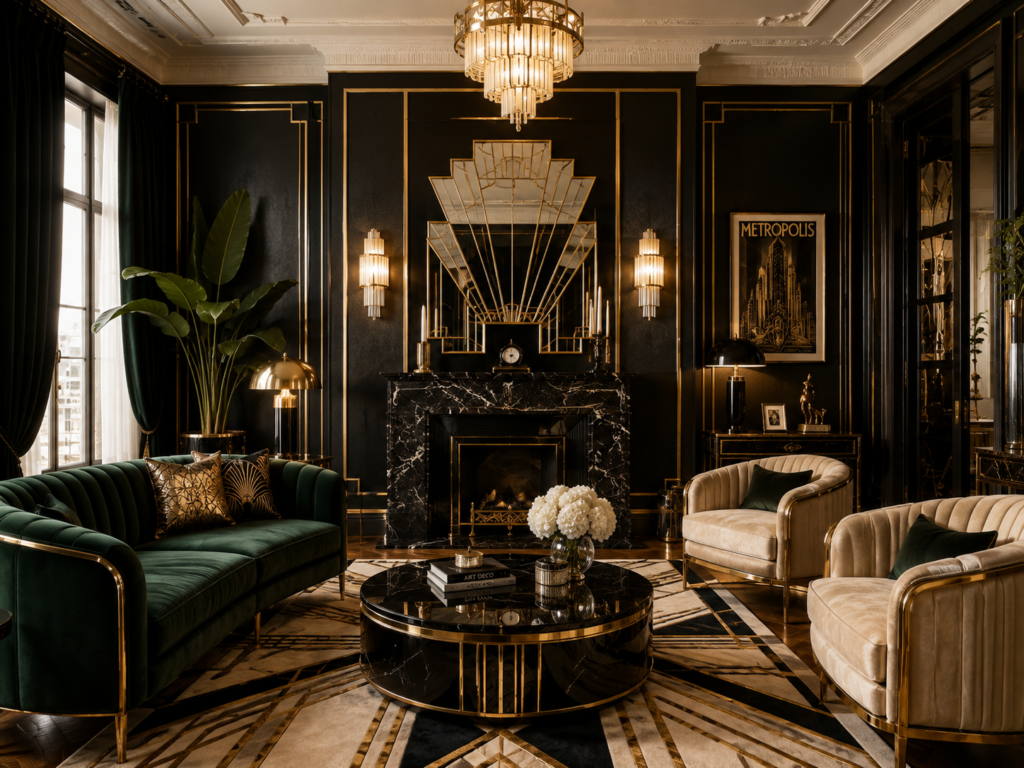
Art Deco (1910–1939)
Art Deco celebrated glamour, luxury and innovation. Influenced by the Jazz Age and advances in technology,
interiors featured bold geometric shapes, luxurious materials and dramatic contrasts. It remains one of the most recognisable interior styles today.
Architectural features
- Geometric detailing
- Curved corners
- Decorative wall panelling
- Symmetrical layouts
- Statement lighting
- Metallic finishes
- Decorative mirrors
- Bold architectural shapes
Everything was designed to make a statement.
Colour palette
Popular Art Deco colours included:
- Emerald green
- Black
- Gold
- Navy blue
- Deep teal
- Ivory
- Burgundy
Furniture
Furniture was luxurious and sculptural.
Materials included:
- Velvet
- Marble
- Brass
- Chrome
- Glass
- Lacquered wood
Popular pieces included:
- Curved sofas
- Cocktail cabinets
- Mirrored furniture
- Geometric coffee tables
- Statement armchairs
- Sunburst mirrors
How to recreate the look today
Instead, focus on:
Keeping accessories bold but considered.
Introducing geometric patterns
Using brass and gold accents
Choosing velvet upholstery
Adding statement lighting
Mixing marble and dark woods
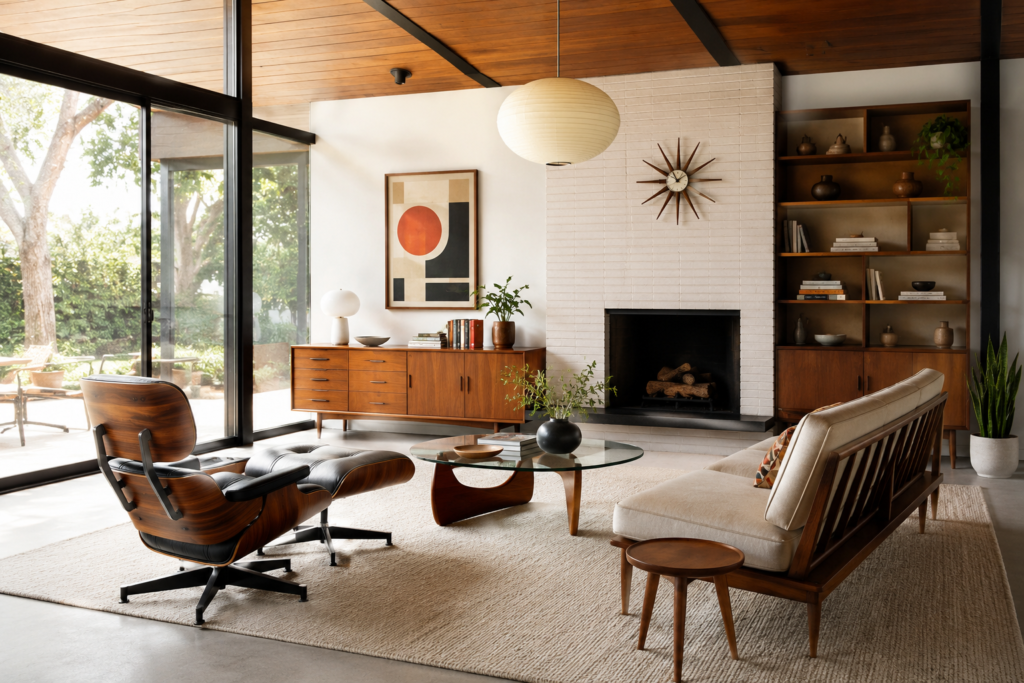
Modernism (1930–1965)
Modernism transformed the way homes were designed by prioritising simplicity, functionality and honest materials.
The philosophy of “form follows function” meant that every piece had a purpose, creating uncluttered interiors that felt open, practical and timeless.
Architectural features
- Open-plan layouts
- Large windows
- Flat roofs
- Clean lines
- Minimal ornamentation
- Built-in storage
- Functional layouts
- Strong indoor-outdoor connection
Modernist homes focused on space, light and practical living.
Colour palette
Popular Modernist colours included:
- White
- Warm grey
- Charcoal
- Olive green
- Mustard yellow
- Burnt orange
- Natural wood tones
Furniture
Furniture combined comfort with function.
Materials included:
- Teak
- Walnut
- Plywood
- Steel
- Leather
- Glass
Popular pieces included:
- Eames-style lounge chairs
- Low-profile sofas
- Sideboards
- Nesting tables
- Minimal shelving
- Sculptural lighting
How to recreate the look today
Instead, focus on:
Keeping rooms uncluttered
Choosing furniture with clean lines
Maximising natural light
Introducing warm timber finishes
Selecting functional statement furniture
Limiting unnecessary accessories
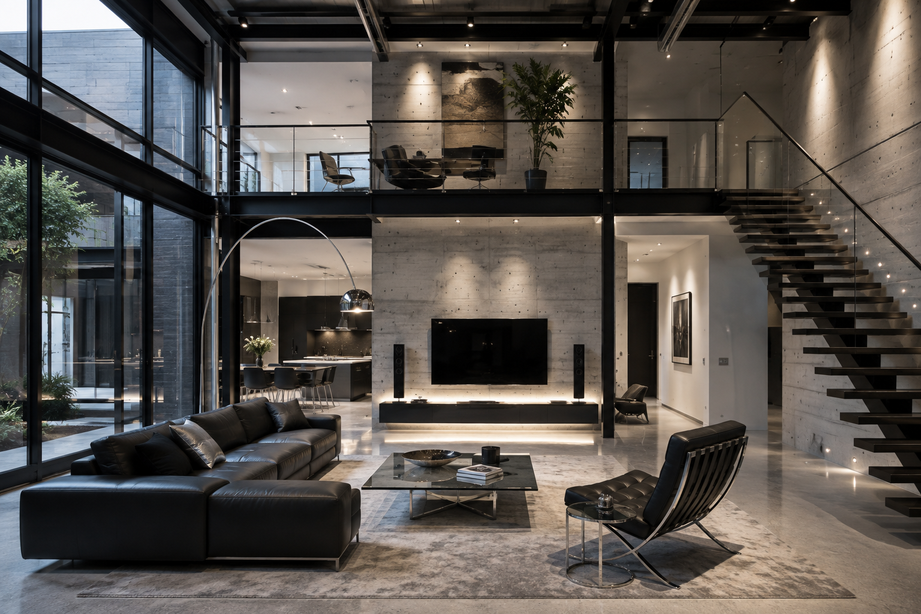
High Tech (1970s–Present)
High Tech interiors celebrate innovation, engineering and modern technology. Inspired by industrial architecture,
the style embraces exposed structural elements, advanced materials and smart home technology to create sleek, forward-thinking spaces.
Architectural features
- Open-plan spaces
- Exposed steel beams
- Glass walls
- Floating staircases
- Concrete finishes
- Industrial detailing
- Integrated lighting
- Smart home technology
Rather than hiding structural elements, High Tech design makes them a feature.
Colour palette
Popular High Tech colours included:
- White
- Black
- Grey
- Silver
- Charcoal
- Concrete tones
- Metallic accents
Furniture
Furniture is sleek, minimalist and functional.
Materials included:
- Glass
- Stainless steel
- Aluminium
- Concrete
- Leather
- High-gloss finishes
Popular pieces included:
- Modular sofas
- Glass coffee tables
- Floating storage
- Sculptural lighting
- Minimal dining furniture
- Smart integrated appliances
How to recreate the look today
Instead, focus on:
Using glass and metal finishes
Incorporating smart home technology
Choosing minimalist furniture
Keeping layouts open
Using integrated lighting
Limiting decoration in favour of architectural features
Bringing History Into Your Home
Understanding your home’s architectural era doesn’t mean recreating a period property exactly as it once was.
Instead, it provides a starting point for making thoughtful design decisions that respect your home’s original character while supporting modern living.
Whether you own a Georgian townhouse, a Victorian terrace, an Edwardian semi-detached home or a contemporary new build,
taking inspiration from your property’s history can help create interiors that feel balanced, authentic and timeless.
At Starting Today Interiors, I believe every home has a story. By understanding where your home fits within the history of interior design,
you can make confident choices about colour, furniture and materials that enhance its character rather than compete with it.